

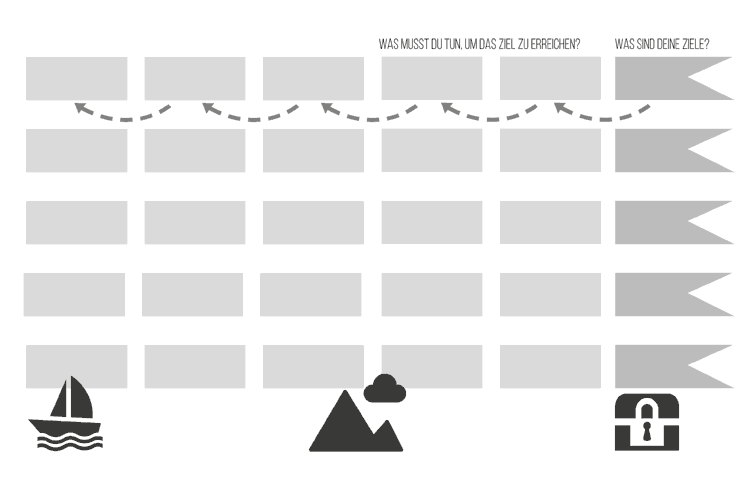
Nimm dir nun wieder ein Blatt Papier und schreibe an den rechten Rand dein erstes Ziel. Du kannst aber auch als Vorlage das folgende PDF herunterladen und ausdrucken.
Wie finde ich mein Ziel?
Überlege dir dazu, wie sich deine Welt verändert, wenn du die oben ausgesuchte Veränderung erreicht hast? Versuche dein Ziel möglichst konkret zu formulieren. Also lieber „ich arbeite nicht mehr so viel“ anstatt „ich habe 3 freie Tage pro Woche“.
Außerdem ist es wichtig, dass du deine Ziele positiv formulierst. Es ist nämlich ein großer Unterschied, ob du weißt, was du willst – oder was du nicht willst. Wenn du nämlich nur weißt, was du nicht (tun) willst, dann heißt das noch lange nicht, dass du weißt, was du stattdessen (tun) willst.
Ein Beispiel: Wenn du schreibst „ich arbeite nicht so viel“, dann hast du nicht festgelegt, was du stattdessen tun willst. Daher kann es oft sinnvoll sein, wenn du konkret schreibst: „Ich habe mehr Zeit für meine Familie, Freund*innen und Interessen“.

With its intuitive design, engaging pace, striking sci-fi aesthetic, and intelligently crafted challenge system, space waves is a compelling choice for anyone who enjoys games that demand dexterity and quick reflexes.
Progress in rhythm games is often very noticeable. A sequence of signals that once caused you to make mistakes can become familiar after a few practice sessions, and actions that once required careful thought gradually become natural reflexes.
This is a great starting point for goal-setting! I’ve found that breaking goals into smaller, actionable steps really helps maintain momentum. What strategies have you found gd effective?
This post really resonated with me! I’m curious, how did you define your personal goals along the journey? Also, do you believe our goals can evolve over time? fnf